Circular Economy (CE)
Second Life Batteries in Practice with greenSANE
Our Mission**
greenSANE was created to demonstrate that real energy transformation doesn’t end with producing electricity from renewable sources.
We believe clean energy should come from clean sources — including in terms of materials.
That’s why we apply Circular Economy principles and EU-level sustainability standards, giving electric vehicle (EV) batteries a second life.
1. Reuse Before Recycle — in Line with EU Regulations
Under the EU Circular Economy Action Plan (CEAP 2020) and Regulation (EU) 2023/1542 on batteries and waste batteries, the key principle is:
👉 reuse before recycling.
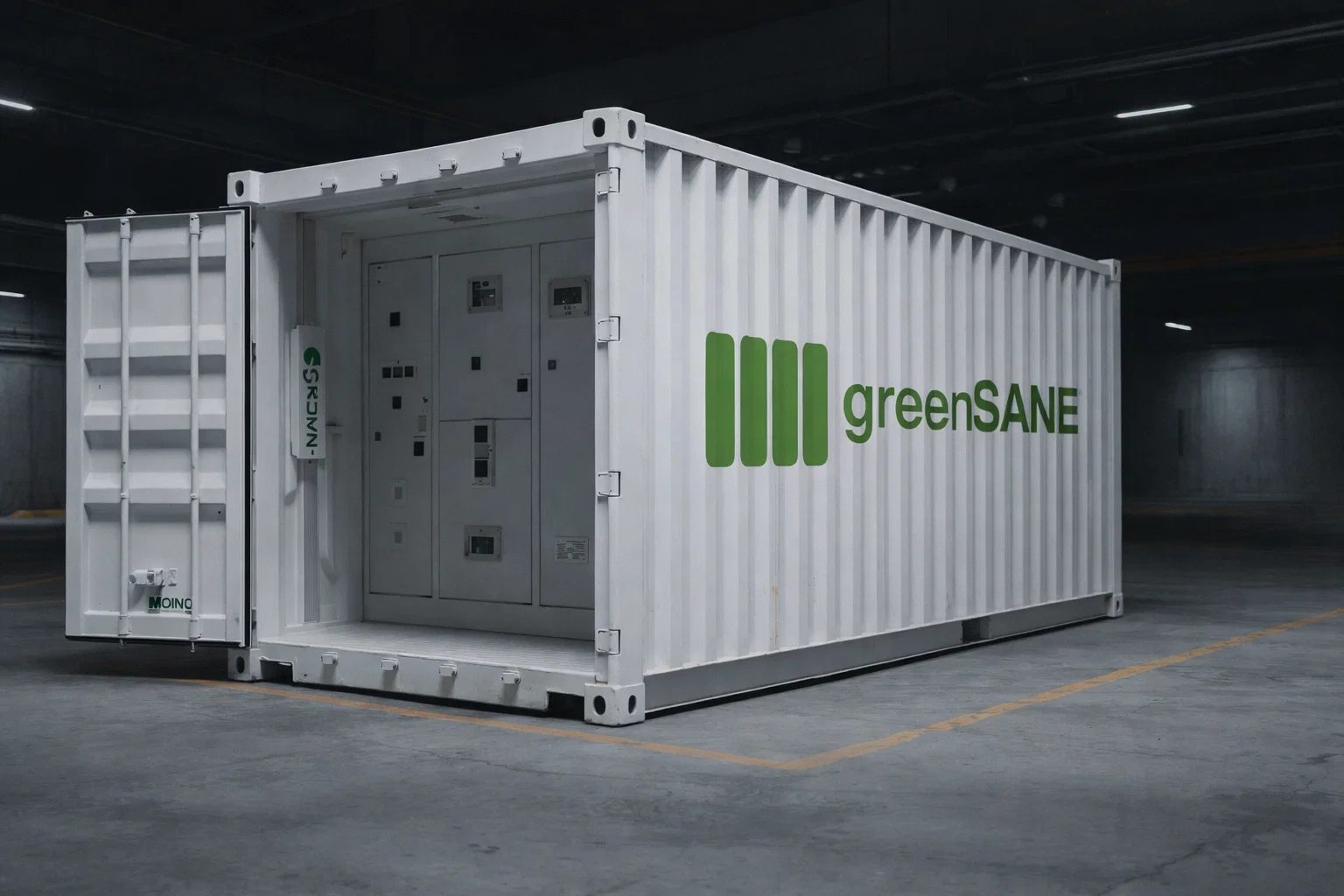
greenSANE puts this into practice — testing every cell and battery pack from EVs and qualifying them for second-life use in Battery Energy Storage Systems (BESS).
As a result:
-
We extend the life of batteries by an additional 7–10 years before they reach recycling.
-
We reduce the demand for new lithium-ion cells.
-
We cut CO₂ emissions by 60–80% across the entire lifecycle of the energy storage system.
This is real Circular Economy implementation — not just a declaration.
2. Energy Storage Made Accessible for Everyone
By reusing EV cells, second-life energy storage systems are on average 35–45% cheaper than systems built solely from new cells.
Lower cost means:
-
Solar and wind farms can manage surplus energy more efficiently.
-
Small and medium-sized businesses can stabilise their consumption.
-
Energy communities and residential cooperatives can meaningfully participate in the energy transition.
Through our collaboration with EneGIVE, we also provide an Energy-as-a-Service (EaaS) model, enabling clients to use storage systems without upfront CapEx — with full servicing and 24/7 monitoring included.
3. Energy That Doesn’t Disappear
During peak production, PV and wind farms often have to curtail generation — a phenomenon known as curtailment.
greenSANE storage systems capture this otherwise wasted energy, supporting compliance with EU directives RED II and RED III.
The impact:
-
More renewable energy reaches the grid instead of being wasted.
-
Reduced reliance on conventional, high-emission energy.
-
Higher profitability of renewable projects.
Every stored megawatt-hour is a step toward a zero-emission economy.
4. Local Energy and Energy Independence
Thanks to modular architecture and flexible configurations, our storage units are ideal for energy communities, multifamily buildings, and local microgrids.
This directly supports:
With greenSANE storage, you can:
-
Maximise local self-consumption,
-
Reduce dependence on conventional electricity,
-
Stabilise local grids and relieve overloads.
This is energy in circulation — local, clean, accessible.
5. Cooperation with Eneris B&R — Closing the Loop
A key part of closing the battery cycle is our collaboration with Eneris B&R — one of Poland’s leading battery recyclers.
Under our signed Letter of Intent:
-
Eneris B&R supplies greenSANE with battery packs that still meet technical requirements.
-
After their second life, batteries return to Eneris for full recycling.
-
Together, we close the loop: recycler → repurpose → operator → recycler.
This is a model example of Circular Economy in the battery–energy value chain.
6. Transparency, Battery Passport, and ESG Reporting
All greenSANE systems are prepared for integration with the EU Battery Passport, required under Regulation (EU) 2023/1542.
This ensures:
-
Every module and pack has documented origin, parameters, and usage history.
-
Full carbon footprint reporting and material recovery KPIs.
-
Compliance with ESG and CSRD (Directive 2022/2464).
greenSANE provides full environmental data transparency — enabling sustainability reporting in practice, not just on paper.
7. Our Circular Economy Impact in Numbers
| Indicator |
Environmental Impact |
Scale |
| Reused EV batteries |
Up to 80% qualified for second life |
t/year |
| Reduced lifecycle emissions |
60–80% vs. systems with new cells |
tCO₂e/MWh |
| System cost reduction |
35–45% |
% |
| Reduced PV curtailment |
10–30% energy recovered |
MWh/farm |
| Extended battery lifetime |
+7–10 years |
years |
| Active CE partnerships |
≥3 in 2025 |
— |
8. Circular Economy Is Our Operating Model
For greenSANE, the Circular Economy isn’t a trend — it’s the foundation of our technology and design philosophy.
We believe CE in the energy sector isn’t just about recycling, but about keeping value circulating as long as possible — technological, environmental, and societal value.
By giving batteries a second life,
we give energy a second chance,
and give our planet a third life.
Legal Basis and References
-
Regulation (EU) 2023/1542 on batteries and waste batteries (incl. Battery Passport)
-
EU Circular Economy Action Plan (CEAP 2020)
-
RED II / RED III Directives — energy communities and RES integration
-
CSRD Directive (2022/2464) — ESG reporting
-
Poland’s RES Act (Journal of Laws 2023, item 1436)