How second-life batteries, modular design, and industrial engineering came together to build a new kind of energy infrastructure.
It started with a simple observation: too much clean energy was going to waste.
Solar farms across Europe were overproducing during daylight hours — sending excess power back to the grid, often at rock-bottom prices or not at all. Meanwhile, industrial facilities were paying peak tariffs to run their operations at night. We saw a massive inefficiency, not in how energy was made — but in how it was managed.
At the same time, the electric vehicle boom was creating a new, untapped resource: batteries that were no longer roadworthy but still had years of usable life left in them.
This convergence — surplus clean power, skyrocketing energy costs, and discarded EV batteries — sparked an idea. What if we could connect all three?
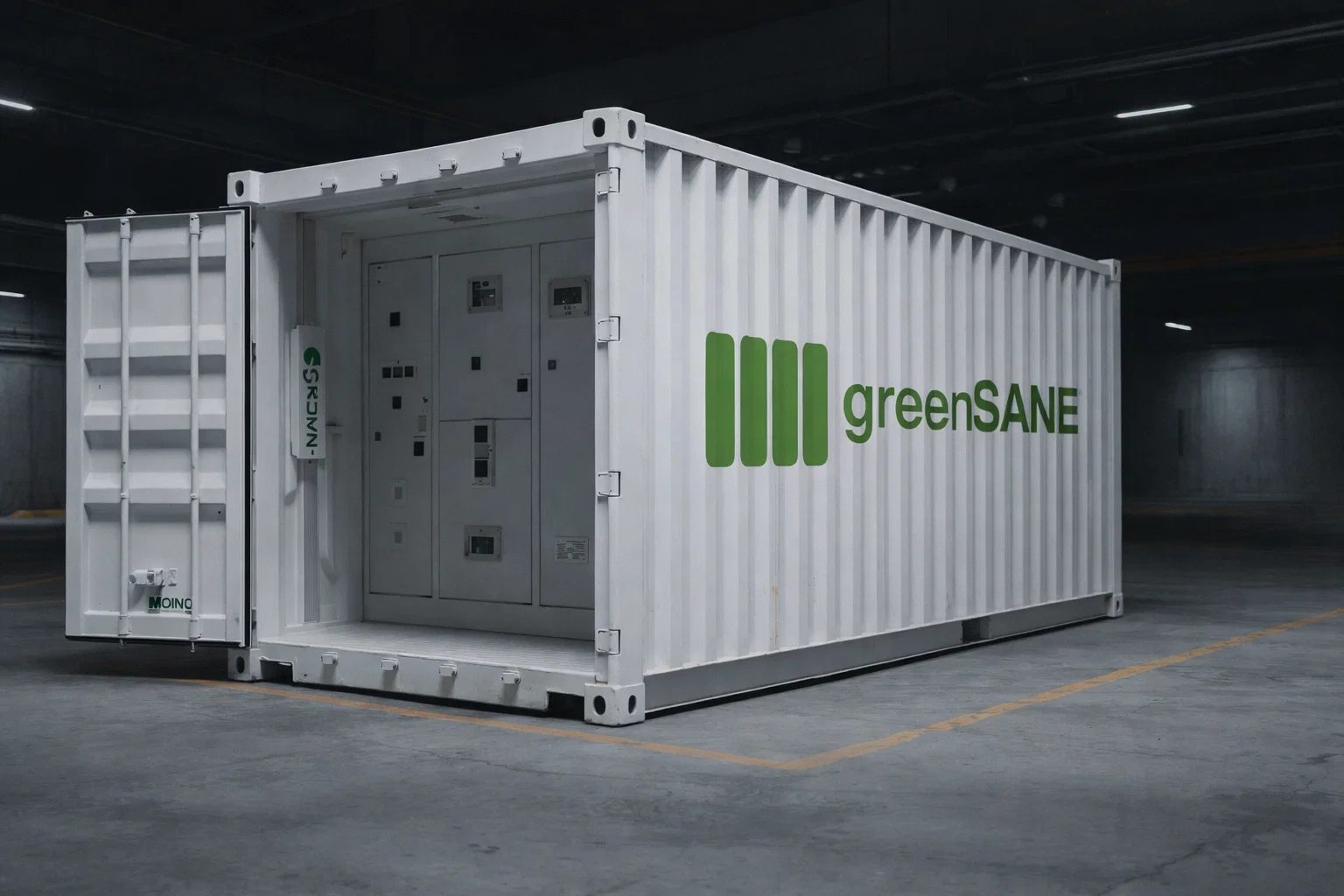
GreenSane was founded with a mission: to engineer modular energy storage containers using second-life EV batteries, making clean energy more usable, more profitable, and less wasteful.
We didn’t want to just build another container. We wanted to redefine what a battery storage system could be:
Circular by design — reclaiming used EV cells and extending their life
Modular and scalable — deployable in solar farms, factories, hospitals, or microgrids
High-capacity and low-cost — delivering up to 9 MWh per container
Built in Europe — with strict safety, quality, and ESG standards
And so, GreenSane was born — not as a product brand, but as a technological and ecological platform for the energy sector.
Most battery systems rely on brand-new lithium-ion cells — expensive to produce and heavy on carbon emissions. But EV batteries, even after years on the road, often retain 70–80% of their original capacity.
We saw that as value — not waste.
By sourcing high-quality second-life cells and giving them a second life inside our containers, we reduce lifecycle emissions by up to 80%. This is our commitment: no battery ends up as waste. Everything is reused, repurposed, or responsibly recycled.
Our storage containers aren’t designed just for grid operators — they’re built for real-world, industrial use cases:
Solar & wind farms can store excess production and sell at peak prices
Factories can charge at night and run on stored energy during peak tariff hours
Hospitals, data centers, and field ops can stay online with fully autonomous storage
Microgrids and remote sites gain reliable, off-grid stability
Each container is smart, remotely monitored, and flexible in configuration. You can scale from 100 kWh to multiple megawatts — depending on your needs.
